 Fully Licensed and Insured
 Request an Oil Tank Scan
 Request a Free Estimate

 Fully Licensed and InsuredRequest an Oil Tank ScanRequest a Free Estimate
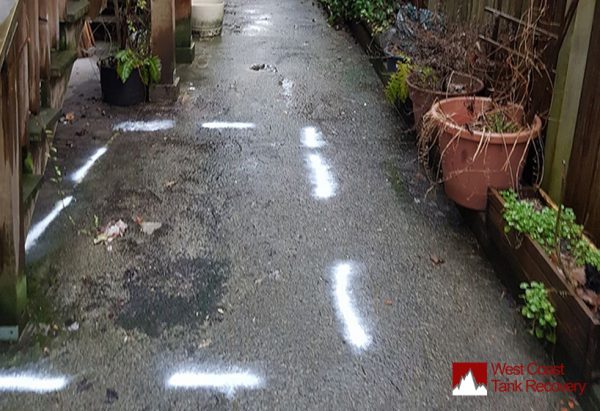
If you’re a homeowner in BC, the idea of an old oil tank hidden in your yard is probably one of those out of sight, out of mind things – until it isn’t. Maybe you’re planning a new deck, or perhaps you’re just curious about the history of your property. Either way, trying to figure out how to detect oil tank buried hazards on your own can be a bit like searching for a needle in a haystack, except the needle is a massive metal container filled with old fuel.
While we all love a good DIY project, this is one area where a simple shovel and a lucky guess just won’t cut it. At West Coast Tank Recovery, we’ve seen why professional equipment is the only way to get the job done right.
Years ago, it was common practice to simply cut the pipes off a few inches below the grass line when a tank was no longer needed. Over time, layers of soil, new sod, and even beautiful garden beds grow over these spots.
You could walk over a buried tank every single day for ten years and never know it’s there. If you’re trying to learn how to detect oil tank buried structures by just looking for a rusty pipe, you might miss the tank entirely. The real danger isn’t what you can see; it’s what has been paved over or hidden by decades of landscaping.
You might think a high-end metal detector from a hobby shop would do the trick. While those are great for finding lost keys or old coins, they often struggle with the depth and density of a residential oil tank.
Our team uses industrial-grade Ground Penetrating Radar (GPR) and specialized magnetic locators. These tools don’t just beep when they find metal; they help us see the shape and size of what’s underground. This precision is vital. We need to distinguish between a harmless old pipe and a 500-gallon tank that could be reaching the end of its lifespan.
The biggest risk of trying to figure out how to detect oil tank buried hazards without the right gear is accidental damage. If you start digging around based on a hunch, you risk striking the tank or its old copper lines.
If that tank has even a small amount of oil left in it – which most do – a single puncture can turn a routine check into a very expensive environmental cleanup. Professional equipment allows us to map out the exact location without ever breaking the soil. It’s the measure twice, cut once rule of the tank recovery world.
In today’s real estate market, I think it’s clear isn’t good enough for insurance companies or banks. They want proof. When we use professional equipment to scan your property, we provide a clear, documented report.
If we find nothing, you have a certificate of compliance that makes selling your home much easier. If we do find something, you have the exact coordinates so we can remove it safely and efficiently. Knowing for sure is always better than worrying every time it rains heavily.
At West Coast Tank Recovery, we take the guesswork out of the equation. We’ve spent years perfecting the art of the underground search, and we have the high-tech tools to back it up.
Don’t spend your weekend digging holes in the lawn or worrying about what might be under your driveway. If you want to know for certain how to detect oil tank buried risks on your property, give us a call. We’ll bring the gear, find the facts, and make sure your home stays safe and soil-friendly.