 Fully Licensed and Insured
 Request an Oil Tank Scan
 Request a Free Estimate

 Fully Licensed and InsuredRequest an Oil Tank ScanRequest a Free Estimate
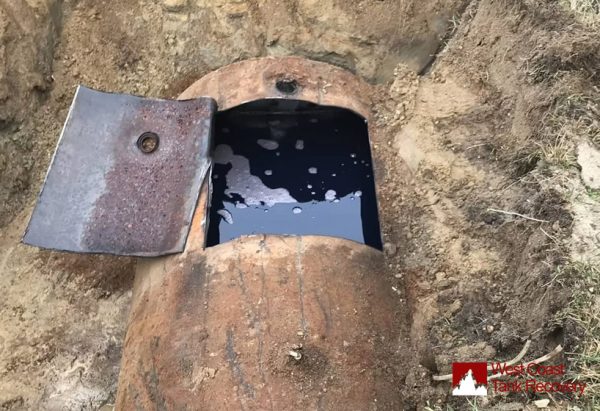
Buying a home in British Columbia is a massive milestone, but it also comes with its fair share of detective work. If you’re looking at a charming older house – especially one built before the 1970s – there is a hidden detail you absolutely cannot ignore: the possibility of a buried fuel tank.
Knowing how to detect underground oil tank presence isn’t just about being thorough; it’s about protecting your bank account. An old, leaking tank can lead to environmental issues and massive cleanup costs that most insurance policies won’t touch.
At West Coast Tank Recovery, we help Vancouver homeowners navigate this process every day. Here is what you should look for before you sign those final papers.
While the tank itself is hidden beneath the soil, it usually leaves behind a few breadcrumbs. One of the easiest ways to start is by looking at the exterior walls of the house.
Check for two specific pipes: a vent pipe and a fill pipe. The fill pipe is often a small metal cap sticking up an inch or two from the ground, while the vent pipe usually runs up the side of the house and has a small mushroom cap on top. Even if the home has been converted to natural gas, these pipes were often left behind. If you see them, there is a very high chance a tank is still lurking nearby.
If the house used to run on oil, the furnace would have been connected to the tank by small copper lines. Head down to the utility room and look at the floor near the furnace or along the foundation walls.
Do you see two small copper tubes poking out of the concrete? Sometimes they are clipped off or bent over. These lines are a smoking gun that an oil tank was once the heart of the home’s heating system. If those lines are there, you need to find out exactly where they lead.
Sometimes the best way to figure out how to detect underground oil tank issues is by looking at the history of the house. Ask the current owners for any old heating bills or maintenance records. You can also check with the local fire department or city hall to see if there are any records of a tank being installed or, more importantly, a permit showing one was professionally removed.
However, keep in mind that many tanks were buried decades ago without any official paperwork, so no records don’t always mean no tank.
Even if you don’t see any pipes or copper lines, the only way to be 100% sure is with a professional scan. Over the years, renovators often cut pipes off below the surface or pave over them with new driveways.
When our team at West Coast Tank Recovery comes out to a property, we use specialized equipment like Ground Penetrating Radar (GPR) and high-powered metal detectors. We don’t just look at the surface; we see through the dirt and concrete to find exactly what’s hiding underneath. It’s a small investment that can save you tens of thousands of dollars in the long run.
If you’re in the middle of a home purchase and have a nagging feeling about a hidden tank, don’t leave it to chance. A quick inspection can give you the leverage you need in your negotiations and, more importantly, total peace of mind.
We’ve seen far too many new homeowners get stuck with a buried surprise after moving in. If you want a hand figuring out how to detect underground oil tank locations on a property you love, give us a shout. We’re happy to help you clear the way for a stress-free move.