 Fully Licensed and Insured
 Request an Oil Tank Scan
 Request a Free Estimate

 Fully Licensed and InsuredRequest an Oil Tank ScanRequest a Free Estimate
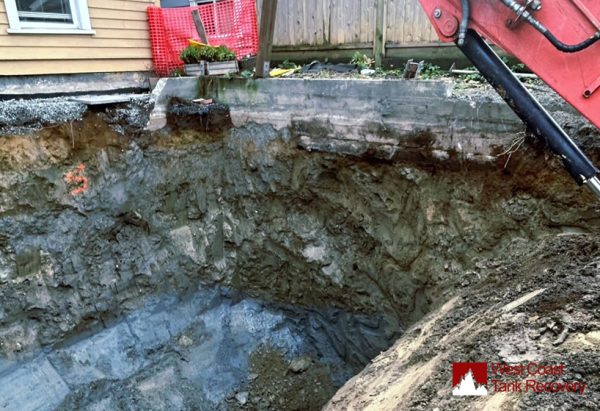
Removing an old oil tank from a property is the visible part of the work. What happens to the soil around it is where the environmental and legal weight of the project actually sits. Soil remediation is not a formality added to the end of a tank removal job. It is the step that determines whether the property is genuinely clean or just looks that way from the surface.
In BC, soil contamination from petroleum hydrocarbons is regulated under the Environmental Management Act. Properties with contamination above regulated thresholds cannot be sold, refinanced, or redeveloped without a remediation plan in place. Understanding what that process involves saves property owners from being surprised by its scope or timeline.
Once a tank is excavated and removed, the exposed soil in and around the former tank pit is assessed for contamination. This is done through soil sampling, where core samples are taken from multiple locations at the base and walls of the excavation and submitted to an accredited laboratory for analysis.
The lab measures total petroleum hydrocarbons, or TPH, in the samples. Results are reported in milligrams per kilogram of soil. BC regulations set specific thresholds based on land use, residential thresholds are lower than industrial ones, and the applicable standard depends on how the property is classified.
Samples are taken from multiple points because contamination does not spread uniformly. A tank that leaked from a corroded bottom joint may have contaminated a specific area of the pit floor while leaving adjacent soil relatively clean. The sampling pattern needs to be thorough enough to define where contamination actually exists, not just confirm that some exists.
Visual assessment alone is not reliable. Petroleum-contaminated soil sometimes has a visible sheen or a detectable odor. Often it does not. Laboratory testing is the only way to establish the actual contamination level and the boundary of the affected area.
When laboratory results show contamination above the regulatory threshold, soil remediation means physically removing the contaminated material and replacing it with clean fill. This is called excavation and disposal remediation, and it is the most common approach for residential oil tank contamination in Metro Vancouver.
The contaminated soil is excavated to the depth required to reach clean material, as confirmed by additional sampling during the dig. The excavated material is loaded into certified containers and transported to a licensed soil receiving facility. The volume removed depends entirely on how far the contamination plume has spread, which the iterative sampling process defines.
Clean fill is brought in to replace the excavated volume. The fill material must be documented as clean and appropriate for the site. It is compacted in lifts and graded to match the surrounding grade before the excavation is closed.
This process sounds straightforward on paper. In practice, the contamination boundary is often not where initial sampling suggests. Iterative sampling during excavation can expand the scope of the dig as clean boundaries are confirmed or found to be farther out than expected. Being prepared for some variability in the final excavation volume is realistic.
The most complex soil remediation situations are those where petroleum contamination has migrated beyond the soil and into the groundwater table beneath the property. This is more common on sites with shallow water tables or where a tank has been leaking for many years without detection.
Groundwater contamination requires a different remediation approach. Simple excavation cannot remove dissolved hydrocarbons from groundwater. Pump-and-treat systems, in which contaminated groundwater is extracted, treated above ground, and reinjected or discharged, are one approach. In some cases, monitored natural attenuation, where the site is tested over time while natural biological processes reduce contamination levels, is appropriate.
A qualified environmental professional assesses whether groundwater is affected and recommends the appropriate remediation method. Not all tank removal companies have this expertise. When selecting a contractor for a property with potential groundwater concerns, confirm that their team includes or works with qualified environmental professionals who can manage the full scope.
Soil remediation is not complete until a closure report is filed. This document, prepared by a qualified environmental professional, confirms that the site has been remediated to the applicable standard and that the contamination file can be closed.
The closure report is what a buyer, lender, or insurer needs to see when a property with a prior contamination history changes hands. Without it, the contamination history remains an open environmental liability on the property, which affects value, insurability, and the ability to finance or sell.
Timeline for the full process, from tank removal through soil testing, excavation, replacement, follow-up testing, and closure report, typically runs from several weeks to a few months depending on contamination extent and regulatory processing times. Starting the process early is always better than letting it run into a real estate or refinancing deadline.
At West Coast Tank Recovery, we manage oil tank removal and soil remediation from initial GPR scanning through to closure report across the Lower Mainland and Metro Vancouver. Our team coordinates sampling, excavation, licensed disposal, and environmental compliance documentation. If you have a tank on your property or need remediation completed before a sale, call us at (604) 628-8786 for a free assessment.
Stay Updated: Get reliable oil tank removal guides, property compliance tips, and soil testing insights directly on Google. Click here to prefer WC Tank Recovery on Google.