 Fully Licensed and Insured
 Request an Oil Tank Scan
 Request a Free Estimate

 Fully Licensed and InsuredRequest an Oil Tank ScanRequest a Free Estimate
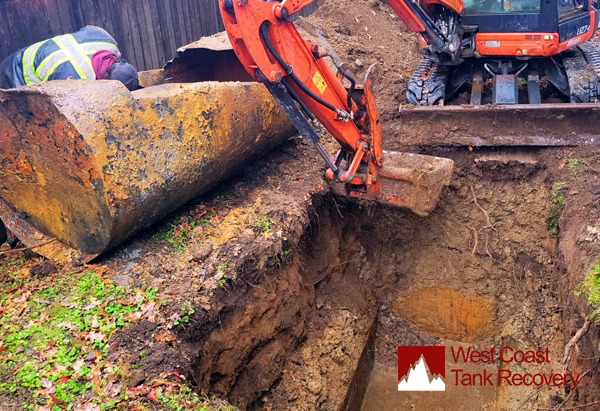
If you live in an older neighbourhood in the Lower Mainland, you might have a hidden guest living in your backyard. Many homes built before the 1970s used underground storage tanks to hold heating oil. Over time, these tanks were abandoned as people switched to natural gas, but the tanks themselves were often left buried and forgotten. Today, those tanks are a major concern for homeowners. If you are wondering how to remove an oil tank from a house, you aren’t just looking at a simple weekend DIY project. In British Columbia, removing these tanks is a legal and environmental necessity that requires professional expertise and proper permits.
In the Lower Mainland, the law is very clear about abandoned oil tanks. Under the BC Fire Code, any underground storage tank that has been out of service for more than two years must be removed. It doesn’t matter if the tank is empty or if you didn’t even know it was there when you bought the house. As the current property owner, the legal responsibility falls on your shoulders. Municipalities like Vancouver, Burnaby, and Surrey have strict bylaws to ensure these tanks don’t stay in the ground where they can rot and leak.
Beyond the fire code, there is the practical side of owning a home. If you try to sell your house or renew your home insurance, the first thing a bank or insurance company will ask about is an oil tank. Most insurance providers in BC will flat-out refuse to cover a property that has an abandoned underground tank because the risk of a leak is too high. Similarly, banks often won’t approve a mortgage for a buyer if there is an unresolved tank on the property. Dealing with it now prevents a massive headache when you eventually want to move.
You might think, “It’s been there for forty years, what’s the harm in another ten?” The problem is that metal doesn’t last forever in our wet West Coast soil. Eventually, these tanks rust through. If even a small amount of leftover oil leaks into the soil, it can spread to your neighbour’s yard or even into the local water system. At that point, you aren’t just paying for a tank removal; you are paying for environmental remediation, which can cost tens of thousands of dollars. Taking care of it proactively is much cheaper than cleaning up a spill.
The process isn’t just about digging a hole. It starts with a professional scan using Ground Penetrating Radar (GPR) to find the exact location of the tank. Once found, a permit is pulled from your local city hall. A specialized team then comes in to pump out any remaining sludge, clean the tank so it’s safe to move, and carefully hoist it out. Most importantly, a technician must take soil samples from the area to prove to the province and your insurance company that the ground is clean.
At the end of the day, removing a tank is about protecting your biggest investment – your home. Once the tank is gone and you have your certificate of removal, your property value is protected, and you can sleep easy during those heavy North Shore rainstorms.
If you have discovered a tank or suspect one is buried on your property, it is time to take action. Understanding how to remove an oil tank from a house safely and legally is the first step toward a clean, compliant property. Don’t wait for a leak to happen or for a home sale to fall through. Contact West Coast Tank Recovery today for a professional scan and a stress-free removal process. We handle the permits, the mess, and the paperwork so you don’t have to.