 Fully Licensed and Insured
 Request an Oil Tank Scan
 Request a Free Estimate

 Fully Licensed and InsuredRequest an Oil Tank ScanRequest a Free Estimate
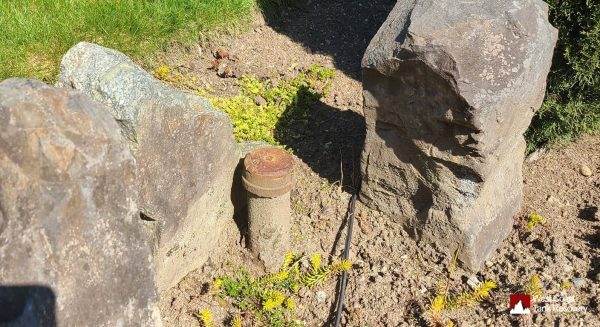
If you own an older home in British Columbia, you likely love the character and charm of the property. However, older homes often hide secrets from the past. One of the most dangerous and expensive secrets could be buried right beneath your beautiful green lawn.
Decades ago, before natural gas and baseboard heaters became the standard, most homes were heated by furnace oil. This oil was stored in massive steel tanks buried in the yard. When homeowners eventually upgraded to modern heating systems in the 1970s and 1980s, many of these old tanks were simply forgotten and left in the ground.
Today, these forgotten tanks are a ticking time bomb. But how do you know if one is hiding on your property? Since they are buried underground, finding them requires playing a bit of a detective game. Here is everything you need to know about spotting the hidden red flags.
You cannot simply walk out into your backyard and spot a buried oil tank. By their very nature, they were designed to be out of sight. Over the years, landscaping changes, new driveways, and overgrown gardens have hidden them even further.
However, they almost always leave behind subtle clues. If you know exactly what to look for, you can spot the warning signs before the tank rusts completely through and causes an environmental disaster. Identifying these hidden oil tank warning signs early is the absolute best way to protect your property value and your peace of mind.
The very first place to look has nothing to do with your yard. It starts with the history of the house itself. The year your home was built is your biggest clue. If your house was constructed anywhere between the 1920s and the late 1970s, there is a very high probability that it originally used oil heat.
You can also dig into the municipal records at your local city hall or fire department. Sometimes, there are old permits on file showing when the house was converted to natural gas. If there is a record of a furnace conversion, but absolutely no record of a tank removal, you should be highly suspicious. It is very likely that the original tank is still sitting in the dirt.
If the history of the house makes you suspicious, it is time to take a walk around your property. You are looking for very specific visual clues.
Start by looking closely at your home’s exterior foundation, especially near where the furnace is located inside. Do you see any old, rusted cast-iron pipes sticking out of the ground? These were often used as fill pipes for the oil delivery truck. Sometimes, you might see a small, curved vent pipe attached to the side of the house.
Next, head down into your basement. Look at the concrete foundation walls near the furnace. Do you see two small copper pipes coming through the concrete that have been pinched or crimped shut? Those are the old fuel feed lines that used to connect the buried tank to the furnace. Finally, look at your lawn. A sudden, unexplained dip or sinkhole in the yard can sometimes indicate that an old tank has collapsed under the weight of the dirt.
Why is finding these clues so incredibly important? Because the risks of ignoring an old oil tank are absolutely massive. These tanks were made of bare steel, and they have been sitting in the damp BC soil for fifty years. They are actively rusting.
If the tank rusts through and the leftover sludge leaks into the soil, you have a toxic environmental spill on your hands. As the property owner, you are legally and financially responsible for cleaning it up. Soil remediation can easily cost tens of thousands of dollars. Furthermore, an undiscovered tank ruins your chances of selling the house. Buyers will walk away, banks will refuse to provide a mortgage, and home insurance companies will completely deny your coverage.
If you spot any of these visual clues, or if the age of your home makes you nervous, you cannot just grab a shovel and start digging holes in your lawn. That is dangerous and highly ineffective.
To know for sure, you need to rely on professional inspection methods. Tank removal experts use specialized, non-invasive technology to scan your property. They can accurately map out exactly what is buried underneath your grass, garden, or driveway without disturbing a single blade of grass.
The first step in a professional scan involves advanced metal detection. However, this is not the kind of metal detector you see people using at the beach to find lost coins.
Professional environmental technicians use highly sensitive magnetic locators. These industrial tools are specifically calibrated to detect large masses of iron and steel buried deep underground. As the technician walks across your property in a grid pattern, the locator picks up the magnetic signature of the massive steel tank. This quickly narrows down the exact area where the tank is hiding.
Once the magnetic locator flags a suspicious area, the team needs to confirm exactly what is down there. To do this, they use Ground Scanning technology, specifically Ground Penetrating Radar (GPR).
GPR works a lot like an ultrasound for the earth. It sends safe radar pulses into the ground and measures how they bounce back. This creates a detailed visual profile of what is buried below. It allows the technician to see the exact size, shape, and depth of the object. GPR confirms whether that large piece of metal is actually an old heating oil tank, or just some buried construction debris. By combining metal detection with ground scanning, you get a 100% accurate answer without ever digging a hole.
Ignoring the warning signs will only cost you more money in the long run. If your Vancouver or BC home was built before 1980, you need professional peace of mind. At West Coast Tank Recovery, we use state-of-the-art scanning technology to accurately locate hidden underground oil tanks without tearing up your yard.
Visit our website today to book a professional tank scan. Protect your property, your wallet, and your peace of mind!