 Fully Licensed and Insured
 Request an Oil Tank Scan
 Request a Free Estimate

 Fully Licensed and InsuredRequest an Oil Tank ScanRequest a Free Estimate
Finding out that an old heating oil tank has leaked on your property is a tough pill to swallow. It usually starts with a strange smell or a oily sheen in a puddle after a heavy rain. Suddenly, what was a simple backyard becomes a source of stress. In British Columbia, we take our land and water seriously. Because of that, professional soil remediation services aren’t just a good idea – they are often a legal requirement.
At WC Tank Recovery, we’ve seen how much a leak can weigh on a homeowner. But we’ve also seen how a proper cleanup can restore both the land and your peace of mind. Here is why you can’t afford to skip this step if things go south with an old tank.
It’s a common question: “Can’t I just dig out the smelly dirt and call it a day?” Unfortunately, it isn’t that simple. In BC, the Ministry of Environment sets very specific “numerical standards” for how much oil can stay in the ground.
Remediation becomes necessary the moment those oil levels exceed provincial limits. This usually happens after a tank has been sitting underground for decades and finally develops a pinhole leak. Even a small spill can migrate through the soil and hit the groundwater.
We always recommend testing the soil even if a leak looks “small.” If you are planning to sell your home or renew your insurance, you will need a certificate proving the land is clean. Without it, you could be looking at massive legal liabilities down the road. That is why soil remediation services are the first thing we discuss once a leak is confirmed.
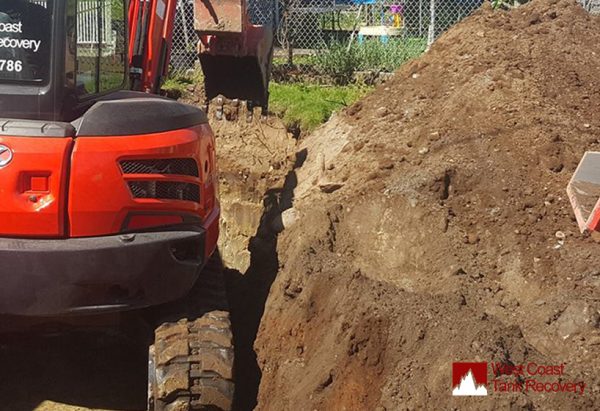
Not every spill is the same, so we don’t use a one-size-fits-all approach. The most common and effective method for residential properties is what we call “excavation and off-site disposal.” In simpler terms, we dig out the contaminated dirt and haul it away to a licensed facility that can treat it safely. It’s fast, and it gives you immediate results.
Sometimes, a tank might have leaked near a foundation or under a deck where we can’t easily dig. In those cases, we might look at other methods. This could include using specialized “bio-remediation” (where we use natural microbes to eat the oil) or “chemical oxidation.”
These sound fancy, but they are just different tools in our kit to get your soil back to a healthy state. Our goal is always to find the most cost-effective way to get your property back to BC environmental standards without causing more disruption than necessary.
Nobody wants a backhoe in their yard for a month. Luckily, a typical residential project is faster than you might think. For a standard oil tank leak, the heavy lifting usually happens in just a few days.
The first step is digging out the contaminated soil, which often takes one to three days. After that, we take “confirmatory samples” from the walls and floor of the excavation. These samples go to an independent lab to prove we got all the oil. This lab work usually takes about five to seven business days.
Once the lab gives us the “all clear,” we backfill the hole with fresh, clean soil and tidy up your yard. In total, most homeowners are looking at a two-week window from the first shovel in the ground to a clean bill of health.
Dealing with contaminated soil is overwhelming, but you don’t have to do it alone. At WC Tank Recovery, we’ve made it our mission to handle the dirty work so you don’t have to. We walk you through every step, handle the lab testing, and make sure all the paperwork is filed correctly with the authorities.
If you suspect a leak or just want to make sure your land is safe, give us a shout. We’ll help you understand your options and get your property back to its best shape. Our soil remediation services are designed to be thorough, fast, and fair – because your home deserves nothing less.